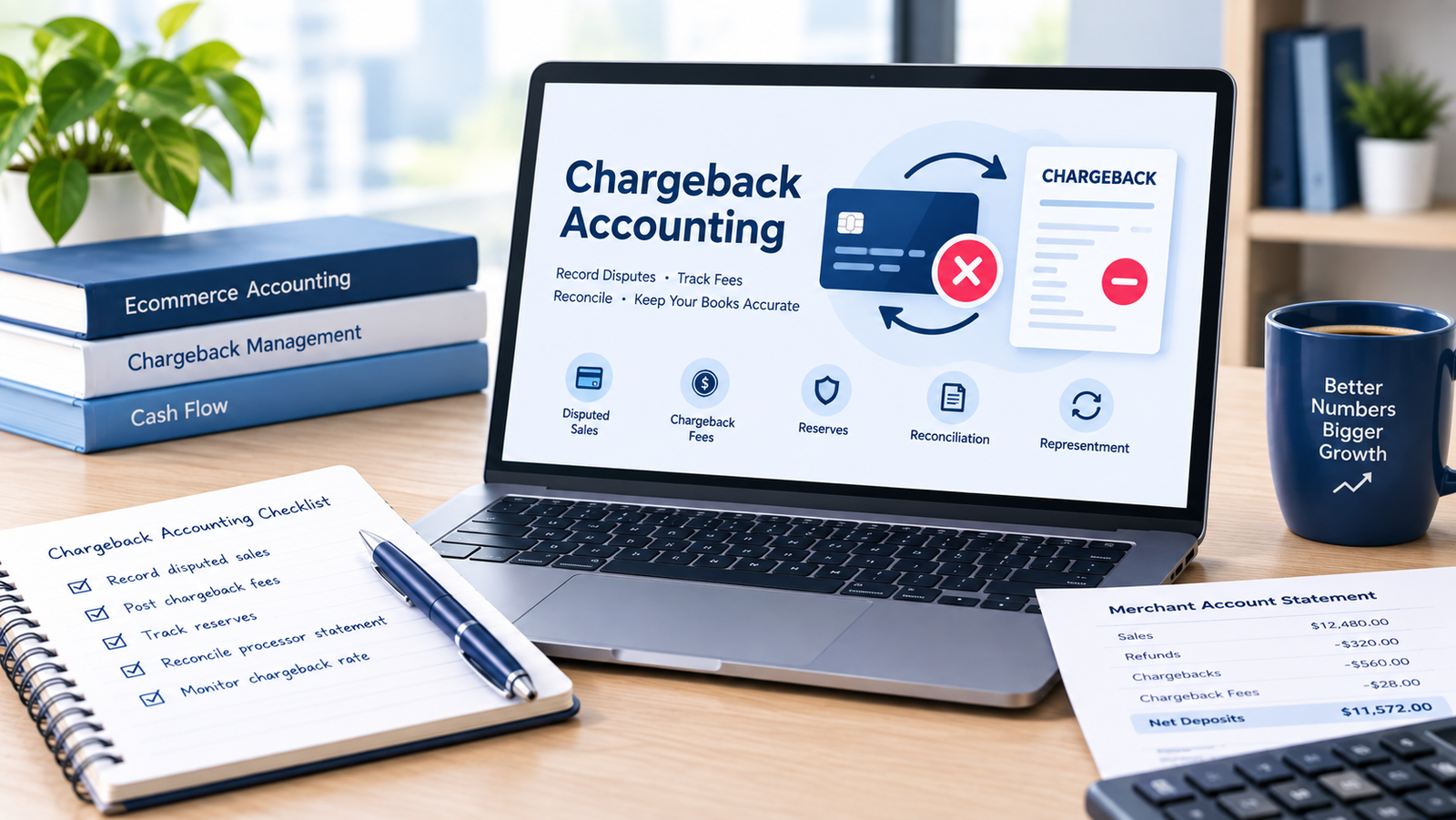

A chargeback rarely announces itself politely. It shows up as a deduction from your payout, a fee attached to it, and a short window to prove your case before the money is gone for good. Chargeback management is the discipline of preventing these forced reversals where possible, tracking them closely, and formally contesting the ones that land, and for most e-commerce operators it sits somewhere between routine operations and a genuine threat to the business if ignored.
This guide covers what a chargeback actually is, how it differs from a dispute or a refund, what counts as a healthy chargeback rate under current network rules, and the practical steps for prevention, reduction, representment, and ongoing monitoring.
What a Chargeback Actually Is
A chargeback happens when a cardholder contacts their issuing bank to reverse a transaction rather than requesting a refund from the merchant directly. The bank pulls the disputed funds back from the merchant’s account, often before the merchant even hears about it, and the merchant then has a limited window, commonly around thirty to forty-five days depending on the network and reason code, to respond with evidence if they want the money back.
This is not the same as a refund. A refund is voluntary and merchant-initiated. A chargeback is involuntary and bank-mediated and comes with a processing fee attached regardless of the outcome. So a merchant can lose the sale and the goods and still pay a fee on top, which is exactly why prevention tends to pay off far more than fighting disputes after the fact.
Disputes vs Chargebacks: A Distinction Worth Making
People use these two terms interchangeably, and that causes real confusion when a team is trying to diagnose what happened. A dispute is the umbrella term for any formal complaint a cardholder raises about a transaction. A chargeback is one possible outcome of a dispute, specifically the reversal itself once the issuing bank has processed it.
Some disputes never become chargebacks at all. Alert networks such as Ethoca and Verifi’s Cardholder Dispute Resolution Network notify a merchant the moment a cardholder contacts their bank, often hours before a formal chargeback is filed. A merchant who refunds during that window resolves the complaint without it ever counting against their chargeback ratio. This is why response speed matters as much as evidence quality: the fastest path to a lower chargeback rate is often catching disputes before they escalate, not fighting them after they do.
What Counts as a Healthy Chargeback Rate
Chargeback rate, also called chargeback ratio, is the number of chargebacks divided by the number of transactions over a given period, usually a rolling month. Card networks run their own monitoring programs, and the rules have gotten notably stricter in the last couple of years.
Visa replaced its older Dispute Monitoring and Fraud Monitoring programs with a single combined program, the Visa Acquirer Monitoring Program, which counts both fraud reports and disputes together against one ratio. That threshold has tightened significantly and now sits well under two percent for merchants who process meaningful volume, with penalties charged per flagged transaction once a merchant is enrolled. Mastercard runs a tiered system: merchants crossing roughly 1.5 to 3 percent with a minimum chargeback count are flagged as Excessive, and merchants above that with higher volume move into a stricter High Excessive tier carrying steeper monthly fines. American Express uses a lower single threshold, generally flagging merchants whose ratio sustains above roughly one percent for several consecutive months.
| Network | Typical monitoring trigger | What happens once flagged |
| Visa (Acquirer Monitoring Program) | Combined fraud and dispute ratio in the low single digits, with a minimum monthly dispute count | Per transaction fees on flagged disputes, acquirer-level scrutiny |
| Mastercard (Excessive / High Excessive) | Roughly a 1.5% to 3%+ ratio, tiered by chargeback count | Monthly fines that escalate the longer a merchant stays enrolled |
| American Express | Ratio sustained above roughly 1% for consecutive months | Excessive chargeback fees, closer account review |
These figures move periodically as networks adjust their rules, so treat them as directional rather than exact, and confirm current numbers with your processor or acquirer before setting internal targets. As a practical benchmark, most healthy e-commerce merchants selling physical goods aim to stay meaningfully below one percent, while subscription businesses, digital goods, and travel tend to run higher simply because of billing confusion and larger ticket sizes.
The Real Cost of a Chargeback
The processor fee is the visible cost, usually somewhere in the fifteen- to one hundred-dollar range depending on the processor and the merchant’s risk history. But that fee is rarely the biggest line item. Once you add the lost merchandise, the original processing fee that is not refunded, and the staff hours spent gathering evidence, industry research on fully loaded chargeback costs has put the average total closer to over a hundred dollars per dispute, sometimes several times the value of the original transaction on smaller orders.
That multiplier is why a merchant with a thin margin can be profitable on paper and still bleed cash through chargebacks quietly, especially if fraud attempts cluster around a bestselling, low-cost item.
Chargeback Prevention: Stopping Disputes Before They Start
Prevention lives upstream of the pain point, and it is the layer most merchants underinvest in because nothing about it feels urgent until a spike hits.
A practical prevention checklist:
- Run Address Verification Service and CVV checks on every transaction, and set clear rules for what to do when only one of the two matches
- Turn on 3D Secure 2.0 for higher-risk orders. The newer version runs largely in the background and shifts a meaningful share of liability to the issuing bank for authenticated transactions, without the checkout friction of the older redirect-based version
- Subscribe to an alert network like Ethoca or Verifi so you get notified when a customer contacts their bank, giving you a chance to refund before the dispute becomes a formal chargeback
- Use velocity checks and device fingerprinting to catch the same bad actor cycling through stolen card numbers
- Flag and manually review orders with mismatched billing and shipping addresses, unusually large quantities of a single item, or rush shipping paired with a first-time customer
Chargeback Reduction: Fixing the Root Causes
Reduction is broader than fraud tooling. A large share of what gets coded as fraud is actually a cardholder who did not recognize a charge on their statement and assumed the worst, often called friendly fraud or first-party misuse.
Where to focus:
- Make sure your billing descriptor clearly matches your brand name and is easy to search, not an obscure parent company name the customer has never heard of
- Send order confirmation and shipping emails immediately, since a customer who cannot find a tracking number is far more likely to dispute the charge than call support
- State your return and refund policy clearly before checkout, not buried three clicks deep in a footer link
- Staff provide customer support well enough that refund requests get resolved in hours, not days, since slow support pushes frustrated customers straight to their bank instead
None of this is glamorous, but it is where most of the actual reduction happens in practice, far more than any single piece of fraud software.
Chargeback Representment: How to Fight Back and Win
Representment is the formal process of submitting evidence to reverse a chargeback. Done well, it recovers real revenue. Done poorly or not at all, it quietly caps your recovery rate at zero.
A solid evidence package typically includes:
- Proof of delivery with a tracking number and delivery confirmation
- The customer’s IP address and device details matched against the shipping location
- Order confirmation and any customer service correspondence, especially anything showing the customer acknowledged receiving the item
- Matching billing and shipping information
- A clear, specific rebuttal letter that addresses the exact reason code cited, not a generic template
Win rates vary a great deal by dispute type. Chargebacks tied to genuine stolen card fraud are difficult to win, since no amount of paperwork undoes an unauthorized transaction. Friendly fraud, where the cardholder actually made the purchase but disputes it anyway, is far more winnable with organized, specific documentation. The mistake many smaller merchants make is skipping representment altogether because the process feels bureaucratic relative to the order value. At scale, even a modest win rate recovers meaningful revenue, and every successful representment also keeps that chargeback off the ratio the networks are watching.
Chargeback Monitoring: Staying Ahead of Network Programs
Monitoring means tracking your ratio against network thresholds before an automated notice tells you that you have already crossed one. Most processors offer some visibility, though it is often delayed compared to real-time transaction data, which matters because a single bad week of fraud attempts can move your ratio faster than a monthly dashboard update reflects.
Dedicated chargeback management platforms close that gap by combining alerts, representment support, and reporting in one place. This is generally why mid-sized and larger e-commerce operations adopt a platform rather than tracking disputes manually in spreadsheets, since by the time a spreadsheet catches a trend, the monitoring program often already has it.
Building a System, Not a One-Time Fix
These five pieces reinforce each other rather than working in isolation. Prevention without monitoring means you cannot tell whether your tooling is actually helping. Representment without prevention just means repeatedly fighting fires you could have avoided in the first place. The merchants who keep their ratios low and their revenue intact treat chargeback management as a system with feedback loops, reviewed monthly, not a single software purchase or a policy change made once and forgotten.
A chargeback is rarely just a payments problem. It is usually a signal about something upstream, whether that is checkout clarity, fulfillment speed, customer communication, or genuine fraud exposure, and the businesses that treat it that way tend to fix the actual cause rather than just processing the paperwork every time it happens again.